
- News
- Women
- Magazine
- IndustryIndustry
- InsightsInsights
- Success Stories
- PublishPublish
- ContactContact
- Media KitMedia Kit
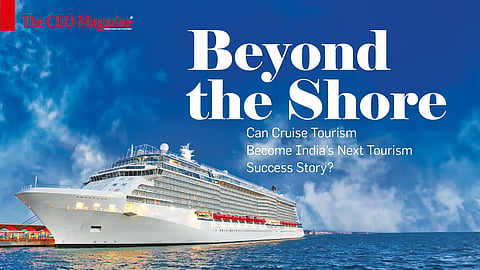
Beyond the Shore: Can Cruise Tourism Become India’s Next Tourism Success Story?

With more than 7,500 kilometres of coastline, over 200 ports, and a growing appetite for experiential travel, India has all the ingredients to become a global cruise destination. Yet, for decades, cruise tourism remained a niche segment, overshadowed by traditional beach holidays and international cruise hubs. Today, a combination of policy reforms, infrastructure investments, and changing consumer preferences is steering the country toward an ambitious goal: transforming cruise tourism into a major pillar of India's blue economy.
Every year, millions of travellers across the world choose to spend their vacations not by flying between destinations but by sailing through them. In the Mediterranean, cruise ships glide between Italy, Greece, and Croatia. In the Caribbean, floating resorts carrying thousands of passengers anchor at island ports almost every day. Alaska's glaciers, Norway's fjords, and Southeast Asia's tropical coastlines have all transformed cruising into one of the fastest-growing segments of global tourism.
Unlike conventional holidays, cruises are no longer just about reaching a destination. The voyage itself has become the experience. Modern cruise ships offer luxury accommodation, fine dining, entertainment, wellness centres, shopping, adventure activities, and curated shore excursions, effectively functioning as floating cities. For travellers, they combine multiple destinations into a single journey. For governments, they represent an opportunity to stimulate local economies, attract international visitors, and create employment across hospitality, transport, retail, and tourism.
India, however, has largely remained absent from this global success story.
This is surprising for a country that possesses more than 7,500 kilometres of coastline, 12 major ports, over 200 non-major ports, two island territories, extensive inland waterways, and a maritime heritage stretching back centuries. From the Arabian Sea to the Bay of Bengal, India offers everything from tropical islands and colonial port cities to backwaters, river systems, wildlife, and spiritual destinations. Yet cruise tourism has historically accounted for only a small share of the country's overall tourism economy.
That narrative is beginning to change.
Over the past few years, cruise tourism has emerged as an area of strategic focus for policymakers. Under initiatives such as Maritime India Vision 2030, Sagarmala, and most recently the Cruise Bharat Mission, the government has begun investing in cruise terminals, simplifying regulations, improving passenger infrastructure, and encouraging private participation. The objective extends far beyond increasing the number of cruise ships docking at Indian ports. It is about creating an entirely new ecosystem that generates employment, supports coastal businesses, and positions India as a competitive cruise destination in Asia.
If these ambitions materialise, cruise tourism could become one of the most significant drivers of India's coastal economy over the next two decades.
Cruise tourism is often perceived as a luxury holiday enjoyed by affluent travellers. In reality, it represents a complex economic ecosystem that extends well beyond the ship itself.
Every cruise voyage triggers economic activity across multiple sectors. Before passengers even board, they often stay in nearby hotels, dine at restaurants, shop in local markets, and use taxis or airport transfers. During port calls, thousands of visitors explore destinations through guided tours, purchase handicrafts, visit historical sites, and spend at cafés and retail stores. Cruise operators, in turn, procure food supplies, fuel, logistics, maintenance services, and local manpower.
The result is a multiplier effect that benefits businesses far beyond the tourism sector.
This is why countries across Europe, North America, and Asia actively compete to attract cruise operators. Cruise terminals are no longer viewed simply as passenger facilities but as catalysts for urban development, waterfront regeneration, hospitality investments, and regional employment.
For India, the opportunity is particularly compelling because of its diverse geography.
A single itinerary can combine heritage cities like Mumbai, Kochi, Chennai, or Kolkata with island destinations such as Lakshadweep and the Andaman & Nicobar Islands. River cruises can connect travellers with Varanasi, Kolkata, Assam, and Kerala's backwaters, while coastal routes can integrate beaches, wildlife reserves, culinary tourism, and cultural experiences into one seamless journey.
Unlike traditional tourism, which often concentrates economic activity within one city, cruise tourism distributes spending across multiple destinations, allowing smaller towns and coastal communities to participate in the tourism economy.
As India seeks to diversify its tourism offerings and strengthen its blue economy, cruise tourism offers a rare opportunity to create value across infrastructure, hospitality, logistics, aviation, retail, and local entrepreneurship simultaneously.
Given its natural advantages, one obvious question arises: why did India remain on the sidelines while global cruise tourism flourished elsewhere?
The answer lies in a combination of infrastructure gaps, regulatory complexity, market perception, and limited investment.
Historically, India's ports were designed with cargo movement as their primary function. Passenger facilities received relatively little attention, and dedicated cruise terminals were scarce. Cruise ships often had to compete with commercial vessels for berthing space, resulting in operational inefficiencies and an inconsistent passenger experience.
The regulatory environment added another layer of complexity. Cruise operators had to navigate multiple approvals involving customs, immigration, port authorities, and security agencies, increasing both costs and turnaround times. Compared with established cruise hubs such as Singapore or Dubai, India's operating environment appeared fragmented and less attractive to international operators.
Consumer awareness also played a role.
For decades, cruises were viewed largely as luxury holidays for international travellers rather than as mainstream vacation options for Indian families. While outbound Indian tourists increasingly explored cruise holidays in Southeast Asia and Europe, domestic cruise tourism remained relatively underdeveloped.
Connectivity posed another challenge. Successful cruise destinations depend on seamless integration between airports, railways, roads, hotels, and ports. In many Indian coastal cities, this supporting ecosystem was either incomplete or not designed with cruise passengers in mind.
Meanwhile, countries across Asia continued to invest aggressively. Singapore established itself as one of the region's leading cruise hubs through world-class terminals and efficient operations. Dubai integrated cruise tourism into its broader tourism strategy, while destinations across the Mediterranean and Caribbean built entire economies around cruise arrivals.
India, despite its geographical advantages, lacked a similarly coordinated vision.
That began to change only in the past decade.
Recognising the untapped economic potential of its coastline and inland waterways, policymakers gradually shifted from viewing cruise tourism as a niche leisure activity to treating it as an important component of maritime infrastructure, coastal development, and tourism-led economic growth.
The launch of the Cruise Bharat Mission in 2024 marked the clearest indication yet that India intends to compete seriously in this space—not merely by attracting more ships, but by building an ecosystem capable of supporting a modern cruise industry.
For years, India's cruise industry grew in small, disconnected steps. While international cruise liners occasionally docked at Mumbai, Goa or Kochi, the country lacked a long-term strategy that brought together ports, tourism, infrastructure and private investment. Cruise tourism remained an opportunity that was frequently discussed but rarely prioritised.
That changed in October 2024 with the launch of the Cruise Bharat Mission, the country's first comprehensive roadmap dedicated exclusively to cruise tourism.
Unlike previous initiatives that focused primarily on port infrastructure, the Cruise Bharat Mission views cruise tourism as an integrated economic ecosystem. Its objective is not simply to attract more ships but to create a globally competitive cruise industry that generates employment, stimulates investment, strengthens coastal economies and positions India among the world's leading cruise destinations.
The targets themselves reflect the scale of the ambition.
According to the Ministry of Ports, Shipping and Waterways, India aims to increase annual cruise calls from 254 in 2024 to 500 by 2030 and nearly 1,100 by 2047. Passenger traffic is projected to rise dramatically from around 460,000 passengers in 2024 to nearly one million by 2029, with a long-term vision of reaching 5 million annual cruise passengers by 2047. Alongside this expansion, the government expects the sector to create approximately 400,000 direct and indirect jobs, spanning hospitality, logistics, retail, tourism services and maritime operations.
These are ambitious targets for a country where cruise tourism is still in its formative stage, but they also indicate a broader shift in thinking. Rather than viewing cruises as a niche luxury product, policymakers increasingly see them as an important pillar of India's Blue Economy—an economic model that promotes sustainable use of ocean and coastal resources to drive growth and employment.
The Cruise Bharat Mission has been structured as a three-phase programme running from 2024 to 2029, with each phase focusing on a different aspect of ecosystem development. The initial phase concentrates on improving port infrastructure, streamlining regulations and enhancing passenger facilities. The second phase aims to expand cruise circuits and strengthen connectivity between ports and tourism destinations, while the final phase focuses on positioning India as a globally recognised cruise destination through international partnerships, marketing and private investment.
In many ways, it is the first time India has attempted to build a cruise industry rather than simply host cruise ships.
Cruise tourism cannot flourish without infrastructure.
Unlike airports, which are designed to move passengers quickly from one destination to another, cruise terminals must offer an entirely different experience. Immigration, customs, baggage handling, transport, hospitality services and waterfront amenities all need to function seamlessly. A poor passenger experience at the port can undermine the appeal of the entire journey.
Recognising this, India is investing heavily in specialised cruise infrastructure.
The long-term roadmap envisages the development of six international cruise hubs at Mumbai, Goa, Kochi, Chennai, Visakhapatnam and New Mangalore. These ports are expected to serve as gateways for both domestic and international cruise routes while connecting passengers to nearby tourist destinations and cultural attractions.
Beyond these major hubs, plans include the development of around 35 cruise terminals and jetties across India's coastline and inland waterways. Several ports have already upgraded passenger terminals with dedicated immigration facilities, modern waiting lounges, improved security systems and digital passenger processing.
The focus is not merely on increasing capacity but on improving the overall visitor experience.
For instance, Mumbai's International Cruise Terminal—one of the largest cruise terminals in the country—has been designed to handle large cruise vessels and significantly higher passenger volumes. Similar upgrades are underway or planned at ports including Kochi, Chennai and Visakhapatnam, reflecting a coordinated effort to distribute cruise traffic across both the western and eastern coasts.
Infrastructure development also extends beyond the ports themselves.
Successful cruise destinations require efficient road networks, airport connectivity, hotels, restaurants, urban transport and tourism services that can accommodate thousands of visitors arriving simultaneously. This creates opportunities not only for government investment but also for private developers, hospitality companies and tourism entrepreneurs.
In many coastal cities, cruise tourism is becoming part of broader waterfront redevelopment projects that aim to revitalise public spaces while attracting commercial investment.
When people think of cruise holidays, images of large ocean liners sailing across the Mediterranean or Caribbean often come to mind. Yet one of India's biggest opportunities may lie not in its seas, but in its rivers.
The country possesses nearly 20,000 kilometres of navigable inland waterways, many of which pass through regions rich in history, culture and biodiversity. These waterways are increasingly being viewed as potential tourism corridors rather than merely transport routes.
Luxury river cruises operating on the Ganga, Brahmaputra, and Kerala's backwaters have already demonstrated the appeal of slow, immersive travel. Unlike ocean cruises that focus on large passenger volumes, river cruises typically offer smaller vessels, longer stays and deeper cultural engagement.
Passengers explore heritage towns, temples, wildlife sanctuaries, traditional crafts and regional cuisine while travelling through landscapes that are often inaccessible by conventional tourism.
The Cruise Bharat Mission seeks to expand this segment by developing additional river cruise circuits across the country. Inland cruise tourism aligns well with global travel trends that favour experiential, sustainable and culturally immersive journeys over conventional sightseeing.
For states with significant river systems, it also represents an opportunity to diversify tourism beyond seasonal attractions and distribute economic benefits to smaller towns and rural communities.
Cruise tourism is frequently measured by passenger numbers, but its real economic value lies in the industries it supports.
Every cruise arrival activates an extensive value chain.
Hotels accommodate passengers before embarkation and after disembarkation. Airlines benefit from increased international and domestic connectivity. Restaurants, cafés and retailers see higher footfall. Tour operators organise excursions, while transport providers—from taxis to coach operators—move visitors between ports, airports and attractions.
Local artisans and handicraft markets often experience increased demand as cruise passengers purchase souvenirs unique to each destination. Food suppliers, waste management companies, maintenance contractors and logistics firms all become part of the cruise ecosystem.
This broad economic impact explains why cruise tourism is increasingly viewed as an investment catalyst rather than simply another tourism product.
For India's coastal states, the implications are particularly significant.
States such as Maharashtra, Goa, Kerala, Tamil Nadu, Karnataka and Andhra Pradesh are already investing in tourism infrastructure, hospitality and urban development. Cruise tourism has the potential to strengthen these investments by bringing higher-value visitors and encouraging longer tourism circuits that combine beaches, heritage, cuisine, wellness and culture.
It also creates opportunities for small and medium enterprises that may never directly interact with cruise operators but benefit from increased visitor spending.
In that sense, cruise tourism is not just about ships docking at ports. It is about building an interconnected economic ecosystem where maritime infrastructure supports tourism, tourism stimulates local businesses, and local businesses contribute to regional development.
By positioning cruise tourism within this broader economic framework, India is attempting to transform its coastline from a geographical advantage into a sustainable engine of growth.
India's cruise ambitions are undoubtedly bold, but transforming the country into a globally competitive cruise destination will require more than new terminals and policy announcements. Cruise tourism is one of the most infrastructure-intensive segments of the travel industry, where every element—from immigration procedures and port operations to last-mile connectivity and destination management—must work in sync.
One of the biggest challenges remains infrastructure readiness.
While India has over 200 ports, only a handful are equipped to handle modern cruise vessels with dedicated passenger facilities. Many ports continue to prioritise cargo operations, making cruise scheduling and passenger movement less efficient than in established global hubs. Expanding terminals is only part of the solution. Ports must also provide seamless customs and immigration services, digital check-ins, baggage handling, transport connectivity and visitor amenities that meet international standards.
Connectivity beyond the port is equally important. Cruise passengers expect destinations to be easily accessible, with reliable roads, airports, hotels and local transport. A world-class cruise terminal loses much of its appeal if travellers face long transfers, traffic bottlenecks or limited accommodation options once they disembark.
Environmental sustainability presents another significant challenge.
Globally, the cruise industry has faced increasing scrutiny over carbon emissions, marine pollution, waste disposal and the ecological impact of large vessels on fragile coastal ecosystems. As India develops its cruise infrastructure, balancing economic growth with environmental responsibility will be essential. Investments in cleaner fuels, shore power facilities, waste management systems and sustainable port operations will become increasingly important as global environmental standards continue to evolve.
Seasonality is another factor unique to India. Unlike the Mediterranean or Caribbean, India's cruise calendar is heavily influenced by the monsoon. Adverse weather conditions restrict operations for several months each year, making route planning and fleet utilisation more complex. This places greater emphasis on developing river cruises, coastal circuits with varied sailing seasons and itineraries that can operate across different regions throughout the year.
India also faces stiff international competition.
Singapore has built one of Asia's most efficient cruise ecosystems through world-class terminals and seamless passenger experiences. Dubai has integrated cruise tourism into its larger tourism and aviation strategy, while countries across Southeast Asia offer well-established multi-country itineraries supported by strong tourism infrastructure.
Competing with these destinations will require India to offer something distinctly its own.
Fortunately, that uniqueness already exists.
Few countries can combine UNESCO World Heritage Sites, spiritual destinations, biodiversity hotspots, colonial heritage, Ayurveda, wildlife, cuisine, island tourism and ancient river civilizations within a single cruise itinerary. India's competitive advantage lies not in replicating the Caribbean or Mediterranean but in offering experiences that cannot be found anywhere else.
Cruise tourism is often viewed through the lens of leisure, but its true significance lies in the economic ecosystem it creates.
Every cruise ship that docks at an Indian port brings opportunities for hotels, restaurants, transport providers, tour operators, retailers, local artisans, food suppliers, logistics companies and countless small businesses that rarely appear in discussions about maritime infrastructure. The impact extends far beyond the passenger terminal, creating a ripple effect across entire coastal economies.
This is precisely why the Cruise Bharat Mission represents more than a tourism initiative. It reflects a broader shift in how India is beginning to view its coastline—not merely as a geographical boundary, but as an economic asset capable of generating investment, employment and regional development.
If the government's vision materialises, India could see annual cruise calls increase from 254 in 2024 to 500 by 2030 and 1,100 by 2047, while annual passenger traffic is targeted to grow from approximately 460,000 passengers today to 5 million by 2047. The planned development of six international cruise hubs, 35 cruise terminals and jetties, and the creation of around 400,000 jobs illustrate the scale of this ambition. These are not incremental improvements; they represent an attempt to build an entirely new tourism economy around India's maritime strengths.
Yet numbers alone will not determine success.
The countries that have built thriving cruise industries did so by creating experiences rather than simply expanding infrastructure. Efficient ports, well-connected destinations, high-quality hospitality, environmental stewardship and seamless passenger journeys are what ultimately attract cruise operators and travellers alike.
India has many of the natural advantages that others spent decades building around—an extensive coastline, diverse landscapes, rich cultural heritage, island destinations, navigable rivers and a domestic tourism market that continues to grow. What it has lacked is a coordinated ecosystem that brings these strengths together.
Today, that ecosystem is beginning to take shape.
Whether cruise tourism ultimately becomes a niche luxury segment or a major pillar of India's tourism economy will depend on how effectively public policy, private investment and destination development converge over the coming years. The opportunity is significant, but so is the responsibility to ensure that growth is sustainable, inclusive and globally competitive.
As India charts its maritime future, the real destination is not merely becoming another stop on the global cruise map. It is transforming its vast coastline into an engine of economic growth, regional development and tourism innovation.
The ships may be setting sail, but for India, the most important journey is only just beginning.
Follow us on Google News