
- News
- Women
- Magazine
- IndustryIndustry
- InsightsInsights
- Success Stories
- PublishPublish
- ContactContact
- Media KitMedia Kit
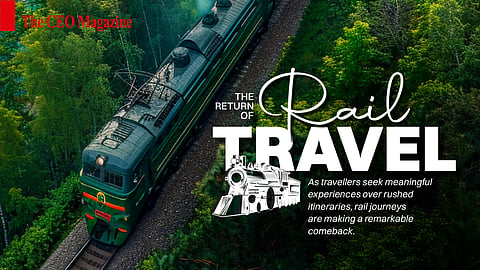
The Return of Rail Travel

For decades, travel has been defined by speed. Budget airlines, express highways and tightly packed itineraries encouraged travellers to see as much as possible in the shortest amount of time. The focus was often on reaching the destination rather than enjoying the journey itself. Today, that mindset is changing.
Across the globe, a growing number of travellers are embracing what has come to be known as “slow travel”, an approach that prioritises immersive experiences, deeper cultural connections and a more relaxed pace of exploration. At the heart of this movement is a mode of transport that many once considered old-fashioned: the train.
From luxury rail experiences in India and Europe to scenic cross-country journeys that showcase landscapes often missed by air travel, rail tourism is witnessing a strong revival. For modern travellers, trains are no longer just a means of transportation; they are becoming an integral part of the travel experience itself.
The rise of slow travel reflects broader shifts in consumer behaviour. After years of fast-paced lifestyles and increasingly hectic travel schedules, many people are seeking experiences that offer authenticity, comfort and mindfulness. Rather than ticking destinations off a bucket list, travellers are looking for meaningful engagement with places, cultures and local communities.
This shift is particularly visible among millennials and Gen Z travellers, who increasingly value experiences over possessions. It is also being embraced by affluent travellers who are willing to spend more for comfort, exclusivity and unique experiences. Rail travel naturally aligns with these preferences. Unlike air travel, which often involves crowded airports, long security queues and limited views, train journeys offer an opportunity to relax, observe changing landscapes and enjoy the journey itself.
Rail travel is experiencing a renaissance in several parts of the world. In Europe, overnight trains have returned to prominence as travellers seek sustainable alternatives to short-haul flights. Routes connecting major cities such as Paris, Vienna, Berlin and Amsterdam are witnessing renewed demand, driven by environmental concerns and a desire for slower, more comfortable journeys.
Luxury rail operators are also expanding their offerings. Iconic experiences such as the Venice Simplon-Orient-Express continue to attract travellers seeking nostalgia, elegance and curated travel experiences. Similarly, countries across Asia are investing heavily in rail infrastructure, recognising the growing demand for rail-based tourism.
The appeal extends beyond transportation. Travellers are increasingly choosing journeys that offer panoramic views, local cuisine, cultural immersion and unique storytelling opportunities.
One of the most significant factors behind rail travel's resurgence is sustainability. As climate change becomes a growing concern, travellers are becoming more conscious of their environmental footprint. Rail transport generally produces significantly lower carbon emissions compared to air travel, particularly for short and medium-distance journeys.
Many travellers are now considering environmental impact as part of their travel planning process. Rail journeys offer an attractive solution by combining convenience with a more sustainable mode of transportation. Governments and tourism boards are also promoting rail travel as part of broader sustainability initiatives, further accelerating interest in train-based tourism.
Few countries are as naturally positioned to benefit from the slow travel movement as India. Home to one of the largest railway networks in the world, India offers an extraordinary variety of rail experiences that combine history, culture, luxury and breathtaking landscapes.
From the snow-capped mountains of the Himalayas to the deserts of Rajasthan and the lush greenery of the Western Ghats, train journeys provide travellers with access to some of the country's most spectacular scenery. While trains have traditionally been viewed as a practical mode of transportation, they are increasingly being recognised as tourism products in their own right.
India's luxury train segment has become a symbol of experiential travel. The Maharajas' Express, often ranked among the world's leading luxury trains, offers curated journeys through some of India's most iconic destinations. Combining heritage, hospitality and personalised service, it has become a preferred choice for international travellers seeking a premium experience.
Similarly, the Palace on Wheels continues to showcase Rajasthan's royal heritage, while the Deccan Odyssey offers immersive journeys through Maharashtra, Gujarat and other western regions of the country. These trains are not merely transporting passengers between destinations. They provide a complete travel experience that blends luxury accommodation, fine dining, cultural encounters and storytelling.
For many travellers, the train itself becomes the destination.
Beyond luxury tourism, India's scenic train journeys are attracting growing interest from domestic and international travellers alike. The Kalka-Shimla Railway, Darjeeling Himalayan Railway and Nilgiri Mountain Railway, all UNESCO World Heritage-listed routes, continue to captivate visitors with their engineering marvels and spectacular views.
Routes through Kashmir, Himachal Pradesh, the Konkan coast and Northeast India are also gaining popularity among travellers looking for unique and immersive experiences. Social media has further amplified interest in these journeys. Stunning visuals of mountain railways, coastal routes and heritage trains frequently go viral, inspiring travellers to choose rail journeys specifically for the experience they offer.
The rise of rail tourism presents significant opportunities for the travel and hospitality industry. Luxury rail operators, tourism boards, hotels and local businesses all stand to benefit from travellers spending more time within destinations. Unlike fast-paced tourism, slow travel encourages longer stays, deeper engagement and higher local spending.
This creates a more sustainable tourism model that benefits regional economies while offering travellers richer experiences. For destinations seeking to reduce overtourism and promote responsible travel, rail tourism provides an effective way to distribute visitors across multiple locations rather than concentrating them in a handful of hotspots.
Digital innovation is also contributing to the growth of rail tourism. Mobile booking platforms, AI-powered travel planning tools and improved customer experiences are making train travel easier and more appealing for younger travellers.
Travellers can now seamlessly plan multi-city rail itineraries, compare routes and discover unique experiences that were previously difficult to access. As technology continues to improve convenience, rail travel is becoming increasingly competitive with other forms of transportation.
The resurgence of rail travel signals a broader transformation in the travel industry. Travellers are increasingly prioritising experiences over efficiency, quality over quantity and connection over speed. The journey itself is once again becoming an important part of the adventure.
In a world where speed has long dominated travel decisions, the growing popularity of slow travel suggests that many people are rediscovering the value of taking their time. For the tourism industry, this shift represents more than a trend. It reflects a fundamental change in how people define meaningful travel.
And as travellers continue to seek deeper, more memorable experiences, rail travel may well become one of the defining travel stories of the decade.
Follow us on Google News




