
- News
- Women
- Magazine
- IndustryIndustry
- InsightsInsights
- Success Stories
- PublishPublish
- ContactContact
- Media KitMedia Kit

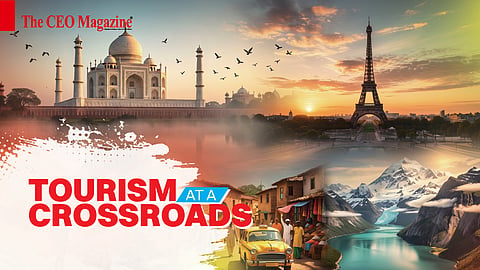
Tourism at a Crossroads

For years, India's travel and tourism story was defined by a simple narrative: more Indians were travelling than ever before. Rising incomes, improving connectivity, expanding aviation networks and a growing appetite for experiences transformed travel from an occasional luxury into an increasingly mainstream aspiration.
In 2026, however, the industry finds itself at a pivotal moment.
The tourism sector is benefiting from growing domestic demand, renewed government attention, increased infrastructure investments and a favourable demographic profile. At the same time, it is navigating a complex environment shaped by geopolitical tensions, rising fuel costs, evolving traveller expectations and intensifying global competition.
Recent developments have brought these dynamics into sharper focus. Prime Minister Narendra Modi's call for citizens to prioritise domestic travel over non-essential foreign trips has sparked a nationwide conversation about tourism's role in economic resilience and national development. Simultaneously, industry leaders are positioning India as a stable and attractive destination for international travellers seeking alternatives amid growing uncertainty in several parts of the world.
The result is an industry standing at a crossroads, where opportunity and challenge coexist in equal measure.
India has never lacked destinations. From the Himalayan landscapes of the north to the coastal regions of the south, from spiritual centres and heritage cities to wildlife reserves and emerging rural destinations, the country's tourism assets are both diverse and extensive.
Yet for decades, domestic tourism often remained overshadowed by the glamour associated with international travel. Overseas holidays became symbols of aspiration, while many domestic destinations struggled with issues of accessibility, infrastructure and service consistency.
The conversation is now changing.
Against the backdrop of global economic uncertainty and geopolitical tensions, policymakers have increasingly emphasised the importance of domestic tourism. Beyond supporting local businesses, domestic travel is being viewed as a mechanism for retaining spending within the country, generating employment and stimulating regional economic development.
This shift comes at a time when domestic tourism has already emerged as one of the strongest pillars of the industry. Short-haul travel, weekend getaways, road trips and regional tourism circuits continue to attract travellers seeking convenience, affordability and flexibility.
The challenge, however, lies in sustaining this momentum beyond policy appeals and temporary circumstances.
For domestic tourism to become a long-term growth engine, travellers must consistently find experiences that match or exceed their expectations. The industry must address longstanding concerns around infrastructure, service standards, cleanliness, connectivity and value for money.
Patriotism may inspire a journey once. Quality determines whether travellers return.
While domestic tourism is gaining renewed attention, another development is quietly reshaping the industry's prospects.
Geopolitical instability in various parts of the world has altered travel patterns. Safety, stability and predictability have become increasingly important factors influencing destination choices. For many international travellers, the appeal of a destination now extends beyond attractions and experiences to include perceptions of security and reliability.
This changing environment presents an opportunity for India.
As one of the world's largest democracies with immense cultural diversity, historical heritage and growing infrastructure capabilities, India is well positioned to attract travellers seeking meaningful and immersive experiences.
Industry leaders believe inbound tourism could become one of the sector's most significant growth drivers in the coming years. International visitors contribute not only through direct spending but also through foreign exchange earnings, investment opportunities and global visibility.
Medical tourism, wellness retreats, spiritual journeys, business travel and cultural tourism all offer substantial potential for expansion.
However, opportunity alone is not enough.
Many competing destinations are equally aggressive in attracting international visitors. Countries across Southeast Asia, the Middle East and Europe continue to invest heavily in tourism promotion, infrastructure and visitor experiences.
India's challenge is not merely to attract attention. It is to convert interest into sustained visitation.
Every discussion about India's tourism ambitions eventually arrives at the same issue: infrastructure.
Few sectors are as dependent on infrastructure as tourism.
A traveller's experience begins long before reaching a destination. Airports, roads, railway networks, public transportation, digital connectivity, accommodation facilities and local services collectively shape perceptions of a place.
Over the past decade, India has made significant progress in expanding its aviation network and improving connectivity through various initiatives. New airports, enhanced road networks and regional connectivity programmes have opened access to destinations that were previously difficult to reach.
Yet significant gaps remain.
Many destinations continue to struggle with inconsistent transportation systems, inadequate accommodation capacity, limited last-mile connectivity and seasonal overcrowding. Popular tourist centres often experience pressure on resources during peak periods, while lesser-known destinations struggle to attract sustained visitor traffic.
The hospitality industry has repeatedly highlighted the need for faster approvals, streamlined regulations and greater investment incentives. Hotel development projects frequently face lengthy approval processes, increasing costs and delaying expansion.
If India hopes to significantly increase both domestic and international tourist arrivals, infrastructure development cannot remain concentrated in a few major destinations. Growth must extend across the broader tourism ecosystem.
Perhaps the most intriguing question facing the industry concerns the future relationship between domestic and outbound travel.
India has emerged as one of the world’s fastest-growing outbound tourism markets. Millions of Indians travel abroad each year, driven by rising incomes, improved global connectivity and increasing international exposure.
Destinations such as Japan, Thailand, Singapore, Dubai, Vietnam and various European countries have successfully positioned themselves as attractive options for Indian travellers.
Many offer streamlined visa processes, efficient transportation systems, predictable service standards and aggressive tourism marketing campaigns.
This raises an important question.
Can domestic tourism compete effectively for the same traveller?
The answer is more nuanced than simple comparisons between destinations.
International travel often offers novelty and aspiration. Domestic travel offers familiarity, accessibility and cultural connection. The objective should not necessarily be to eliminate outbound tourism but to ensure that Indian destinations remain compelling choices in their own right.
Achieving this requires more than promotional campaigns. It requires investment in visitor experiences, destination management and service excellence.
Travellers increasingly compare experiences rather than locations. Expectations formed abroad inevitably influence expectations at home.
Another major transformation is changing how people travel.
The traditional model of tourism focused on destinations. Today's travellers increasingly focus on experiences.
A growing number of travellers seek journeys centred around wellness, spirituality, adventure, culinary exploration, local culture and personal enrichment. The emphasis is shifting from seeing more places to experiencing destinations more deeply.
This trend is particularly evident among younger travellers.
Digital platforms have exposed consumers to a wider range of possibilities, while social media has amplified demand for unique and authentic experiences. Travellers are increasingly drawn to destinations that offer meaningful engagement rather than standardised itineraries.
Spiritual tourism has witnessed remarkable growth, attracting not only older pilgrims but also younger demographics seeking reflection and purpose. Wellness tourism continues to expand as health and well-being become central priorities for many consumers.
Adventure tourism, once considered niche, is becoming increasingly mainstream. Trekking, wildlife experiences, cycling tours, eco-tourism and outdoor activities are attracting broader audiences.
These shifts present opportunities for destinations willing to innovate. They also require businesses to rethink traditional tourism models.
The future may belong less to those who simply sell travel and more to those who curate experiences.
Technology is influencing every stage of travel.
Artificial intelligence, digital booking platforms, personalised recommendations and data-driven planning tools are reshaping how travellers discover, evaluate and book experiences.
Consumers increasingly expect seamless digital interactions, instant information and customised suggestions.
For tourism businesses, technology offers opportunities to improve efficiency, enhance customer experiences and reach wider audiences.
At the same time, it raises competitive pressures.
Travellers now compare destinations globally in real time. Reviews, videos and social media content can significantly influence perceptions within hours. Reputation management has become as important as traditional marketing.
Technology is also helping smaller destinations gain visibility. Places once overlooked by mainstream tourism campaigns can now attract visitors through digital storytelling and targeted promotion.
The industry's ability to adapt to these technological shifts will play a crucial role in determining future competitiveness.
Tourism's importance extends far beyond visitor numbers.
Every tourist journey generates economic activity across multiple sectors. Hotels, restaurants, transportation providers, local artisans, guides, retailers and numerous service providers all benefit from tourism spending.
Investment in tourism infrastructure creates demand for construction, logistics, technology and workforce development. Employment opportunities emerge not only in major cities but also in rural and semi-urban regions.
This broader economic impact is one reason policymakers increasingly view tourism as a strategic sector.
A thriving tourism industry can support regional development, strengthen local economies and contribute to foreign exchange earnings. It can also enhance a country's global image and attractiveness as an investment destination.
For India, tourism represents not merely an industry but a potential catalyst for inclusive growth.
India's tourism sector enters the second half of the decade with considerable momentum.
The country possesses many of the ingredients necessary for success: a vast domestic market, rich cultural heritage, growing infrastructure, expanding connectivity and increasing global visibility.
Yet potential and performance are not the same.
The industry must address persistent infrastructure gaps, improve service consistency, simplify regulatory frameworks and strengthen destination management. It must balance domestic priorities with international ambitions while adapting to changing traveller expectations.
Most importantly, it must recognise that the global tourism landscape is becoming increasingly competitive.
The coming years will determine whether India can translate favourable demographics, policy support and global interest into sustained leadership within the tourism economy.
The opportunity is real. So are the challenges.
Standing at this crossroads, India's tourism industry faces a defining choice: whether to settle for incremental progress or build the world-class tourism ecosystem it has long aspired to create.
The direction it chooses may shape not only the future of travel, but also the broader story of India's economic and cultural influence in the decades ahead.
Follow us on Google News