
- News
- Women
- Magazine
- IndustryIndustry
- InsightsInsights
- Success Stories
- PublishPublish
- ContactContact
- Media KitMedia Kit


Company combines four and half decades of commodity-market expertise with technology, market intelligence, research and new business models as it looks to expand its capabilities across agricultural commodities
Mumbai, India: JK India eAgriTech Limited, a company with 45 years of experience in India’s sugar trade, is strengthening its transition from a traditional commodity trading business into a broader technology and market intelligence ecosystem, combining its domain expertise with digital platforms, research, media and industry-focused initiatives.
Founded by Shri Jitendrakumar (Jitu) Shah, JK India began its journey in the sugar trade at a time when the industry operated predominantly through personal relationships, telephone-based transactions and established networks of traders, brokers, mills and institutional buyers. Over the decades, the company has expanded its capabilities while retaining trust, integrity and long-term relationships as the foundation of its business.
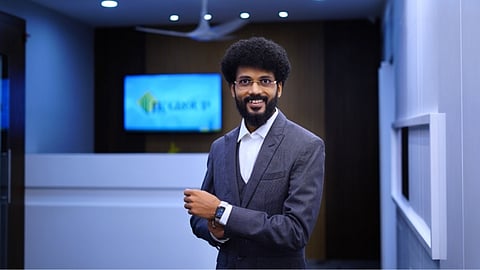
According to Uppal Shah, Chairman & Managing Director, JK India eAgriTech Limited, one of the biggest changes witnessed by traditional businesses has been the speed at which customer expectations have evolved.
“What has changed dramatically is the speed of everything around us,” Shah said. “An institutional buyer purchasing sugar in tonnes today is the same person who gets a samosa delivered in twelve minutes on a quick commerce app. Their home experience shapes their business expectations too.”
That change in customer behaviour has implications even for a traditional B2B commodity business. Buyers accustomed to instant information, transparency and convenience in their personal lives increasingly carry similar expectations into professional transactions. For businesses built in an era of telephone calls, personal relationships and physical trading networks, adapting to those expectations requires technology to work alongside established industry knowledge and relationships.
What has remained constant, Shah said, are the principles established by his father, who founded JK India on trust, integrity and long-term relationships.
“Credibility remains the most valuable asset in business, and we have always believed that sustainable growth comes from creating genuine value for the industry. Our methods have changed with the times. Our purpose has not.”
Having joined the family business at a young age, Shah learnt the trade by spending time in the market, meeting customers and understanding how commercial relationships were built and sustained.
“The biggest lesson I learnt was that business is ultimately about people, not transactions,” he said. His father, he recalled, never believed in shortcuts and encouraged him to understand customers’ realities before attempting to offer solutions. “Even today, I believe leadership is less about having all the answers and more about asking the right questions and staying closely connected with the people you serve.”
JK India’s subsequent move towards technology emerged gradually from recurring problems the company observed across the industry, particularly around access to information, market reach and the speed at which commercial decisions could be made.
Shah describes the company’s approach as “industry-first and technology-enabled.”
“We spent decades in the trade before we wrote a single line of code, and that sequence matters,” he said. “The problems came first, from years of sitting across the table from millers, traders and buyers. Technology became the way to solve them at scale.”
The company’s domain experience has also influenced its approach towards intermediaries in commodity markets. While many digital marketplace models focus on removing intermediaries, Shah believes brokers and traders continue to perform important functions within the sugar trade.
“The textbook view of digitising a commodity market says the platform should remove the intermediary,” he said. “Anyone who has actually worked in the sugar trade knows the broker and the trader carry functions no app has replicated: they extend credit, absorb risk, resolve disputes, and hold relationships built over generations. They are the trust infrastructure of this market.”
Instead of designing technology to eliminate these participants, JK India has focused on enabling existing market participants with better information, greater reach and faster execution.
“Domain expertise gives technology its direction. Technology gives domain expertise the ability to scale,” Shah said.
Alongside the digitalisation of the trade, JK India is also witnessing changes in the economics of the sugar industry as mills increasingly derive value from multiple outputs beyond conventional sugar production.
“The sugar mill is becoming a biorefinery,” Shah said.
Historically, the economics of a sugar mill depended predominantly on sugar, with other outputs treated largely as secondary products or waste streams. Today, the same crushing operation can create value through sugar, ethanol, electricity generated from bagasse, compressed biogas from press mud and potentially feedstocks for emerging bio-based industries.
“Every stream that was once a disposal cost is becoming a revenue line. That is value creation and valorisation happening together, and it changes the fundamental economics of the industry,” Shah said.
A mill supplying ethanol participates in India’s energy-security ambitions, while renewable electricity and compressed biogas connect the sector with the broader clean-energy ecosystem. For an industry historically exposed to sugar cycles, deriving value from multiple outputs also creates a more diversified economic model.
For Shah, the transformation of a second-generation business also involves determining what should evolve while ensuring that its underlying principles remain intact.
“Respecting a legacy does not mean resisting change, it means ensuring that the values remain intact while the business continues to evolve with changing times,” he said.
That approach is visible in JK India’s expansion beyond its traditional trading roots. Over time, the company has developed non-trading businesses spanning media, market intelligence, conferences and research. Although the formats and business models differ, Shah sees them as extensions of the same underlying purpose.
“The tools and business models evolve. The purpose behind them stays the same,” he said. “I believe that is how family businesses transition well across generations. Continuity and innovation complement each other when guided by a clear sense of purpose and shared values.”
JK India has also remained bootstrapped rather than pursuing the conventional venture-backed path to rapid growth. Shah said the company views its approach to capital through the lens of building a long-term institution.
“We have great respect for growth capital and the role it plays in building businesses. Our own view is simply this: we see the company as an institution to be built and cherished, one that outlasts us and serves the industry across generations. Every decision flows from that.”
As the business evolves, Shah believes technology should strengthen rather than replace the trust and relationships on which commodity markets have historically operated.
“The legacy I care about most is this: we are bringing digital infrastructure to a trade that has always run on trust,” he said. “And let me be clear, there is nothing wrong with trust. It built this industry, and it built our company. But trust alone has its limits as a business system.”
Digital records, greater transparency and structured processes can give relationships greater institutional continuity without eliminating the human trust on which the market has traditionally been built.
“That is what we mean when we say the trust was always there, and now it has infrastructure,” Shah said.
Looking ahead, JK India expects its next chapter to extend beyond sugar. Shah sees the company’s four-and-a-half decades in the sector as accumulated knowledge that can be applied to other agricultural commodities, taking its experience in market relationships, information flows and technology adoption into a broader agri-commodity ecosystem.
“If the next generation sees JK India as an organisation that created lasting value while earning the trust of the industry, I would consider that our greatest achievement,” Shah said
Follow us on Google News