

- News
- Women
- Magazine
- IndustryIndustry
- InsightsInsights
- Success Stories
- PublishPublish
- ContactContact
- Media KitMedia Kit


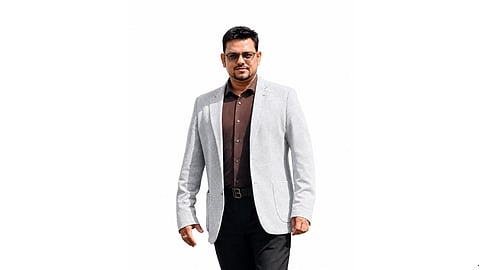
The CEO and Managing Director of Revine Technologies discusses creating an engineering-first culture, separating useful AI from hype and building an Indian company capable of competing globally.
Leadership stories are often reduced to targets, milestones and rapid expansion. Praveen Niraj prefers to begin with a less visible measure: capability. When he took responsibility for leading Revine Technologies, he saw the possibility of turning a conventional test and measurement business into an engineering-led organisation.
The distinction matters to him. Products can be sold in a single transaction; trust has to be earned over time. His philosophy is that engineers should understand a customer’s problem before proposing an answer, and that growth should follow competence rather than substitute for it. For him, leadership is less about visibility than creating the conditions in which capable people can make sound decisions consistently.
In this interview, Niraj discusses the idea that shaped his leadership, the culture he wants to build and where he sees India’s industrial future. The responses are based on his written inputs and have been edited for clarity and length.
When you assumed leadership of Revine Technologies, what did you want to change?
I believed the company could become far more than a traditional test and measurement business. Supplying the right equipment would remain important, but I wanted us to understand the larger challenge a customer was trying to solve.
That meant building an organisation capable of supporting customers from an early discussion through implementation and long-term service. The objective was not simply to expand a catalogue. It was to develop engineering knowledge that could help Indian companies improve products, strengthen manufacturing and compete more confidently.
For me, the opportunity was to combine technology, people and customer understanding in a way that created lasting value.
Your leadership philosophy is to build technical capability before chasing revenue. Why put capability first?
Revenue is necessary for every business, but sustainable revenue is an outcome of doing other things well. If people understand the technology, listen carefully and recommend a solution for the right reasons, customers notice the difference.
Capability also gives a team confidence. Engineers can move beyond repeating product information and begin asking useful questions: What is the customer trying to achieve? Where is the difficulty? What would a successful result look like?
When an organisation invests in people, engineering knowledge and customer trust, growth has a stronger foundation. A short-term sales focus may deliver a number, but expertise creates relationships that can continue for years.
What does an engineering-first culture look like in everyday work?
It begins with the behaviour we encourage. Our engineers should see themselves as problem-solvers, not simply as people selling products. That requires curiosity, careful listening and a willingness to keep learning.
Before a sale, the team must understand the application and help shape an appropriate solution. After the sale, responsibility does not disappear. Installation, training, maintenance, calibration and continued technical support all influence whether the customer receives real value.
Culture is created through these repeated choices. If a team consistently places the customer’s engineering need at the centre of its work, trust becomes part of the organisation rather than a marketing claim.
Revine has moved into several new areas. What connects that expansion?
The connection is the customer’s journey from an idea to a reliable product or operating system. Over time, we saw that customers needed more than individual instruments. They needed help bringing different elements together, maintaining accuracy, automating work and making better use of information.
Our expansion has followed those needs. Although the technologies may differ, the central purpose remains simple: help customers design, test, manufacture and operate more effectively.
The challenge for any growing company is to avoid adding capabilities merely because they are fashionable. Each new area must strengthen the value we can provide and must be supported by genuine knowledge within the team.
Why has artificial intelligence become important to your vision?
AI is changing how companies design, manufacture, inspect and operate. In industrial settings, its value is often practical rather than dramatic. It can help identify defects, recognise patterns in equipment data, reduce repetitive engineering work and support quicker decisions.
But AI should not be treated as a label placed on every problem. Technology becomes useful only when it is connected to a clear need and supported by reliable data and engineering judgement.
I believe the future belongs to companies that combine engineering expertise with AI. Neither is sufficient alone. Engineering provides context and discipline; AI can improve speed, analysis and the ability to act on information.
Where do you see the biggest opportunity for Indian industry?
India is entering an important period in manufacturing and technology. Electric vehicles, semiconductors, renewable energy, electronics, defence, data centres and industrial automation are all creating new demand for engineering capability.
The opportunity is not only to manufacture more. India can become known for designing, testing and improving products that meet demanding global expectations. To achieve that, companies will need skilled people, dependable processes and a willingness to invest in technical depth.
We should use the best technologies available globally while continuing to develop local knowledge and solutions. India’s advantage will come from combining that global exposure with an understanding of its own industries and operating conditions.
What legacy would you like your leadership to leave?
I want to help build one of India’s most respected engineering technology companies: an organisation known for technical excellence, innovation and customer trust.
Scale is important because it enables investment in people and new capabilities. But size alone is not the legacy I am seeking. I would like Revine to show that an Indian engineering company can compete with the world’s best without losing its focus on people, learning and long-term relationships.
If our engineers grow, our customers become more competitive and our work contributes to India’s manufacturing and AI-driven future, that would be meaningful success.




