
- News
- Women
- Magazine
- IndustryIndustry
- InsightsInsights
- Success Stories
- PublishPublish
- ContactContact
- Media KitMedia Kit

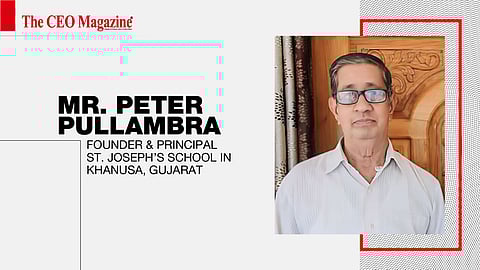
Mr. Peter Pullambra - Founder & Principal - St. Joseph’s School in Khanusa, GUJARAT

Mr. Peter Pullambra: The Visionary “Uncle” Who Shaped Generations In the serene village of Khanusa, Gujarat, stands an institution that has quietly transformed thousands of lives across continents. St. Joseph’s School is not merely an academic establishment; it is a living philosophy—one built on integrity, discipline, and human values. At the heart of this enduring legacy is Mr. Peter Pullambra, affectionately known as “Uncle” by generations of students whose lives he has shaped with wisdom, humility, and unwavering purpose.
In an era defined by titles and accolades, Mr. Pullambra chose a different identity—one rooted in relationship rather than rank. To be called “Uncle” was not incidental; it reflected the deeply personal role he played in nurturing young minds and hearts. He did not merely establish a school; he created a home where learning was holistic, character was paramount, and every child felt seen and supported.
Born into a large family as the second of eight children, Mr. Pullambra’s formative years were grounded in simplicity and responsibility. Life on a farm instilled in him a respect for hard work, patience, and nature’s rhythms—values that would later become central to his educational philosophy. Balancing academics with daily chores shaped his resilience and discipline, qualities that defined both his personal journey and professional calling. After completing his Bachelor’s degree in Physics, Mr. Pullambra began his teaching career in 1969. His professional journey took him across diverse regions of India, enriching his understanding of cultures, communities, and educational needs. These experiences culminated in a defining milestone when he and his wife embarked on their shared mission of institution-building. Their early efforts in Mount Abu marked the beginning of a lifelong commitment to education driven by purpose rather than prestige.
In 1980, the couple laid the foundation of St. Joseph’s School in Pilvai and then by 1992 at Khanusa—an institution that would become the centerpiece of Mr. Pullambra’s vision. From the outset, his goal was clear: education must go beyond textbooks and examinations. He envisioned a learning environment that balanced academic rigor with emotional intelligence, discipline with compassion, and ambition with ethical grounding.
Mr. Pullambra believed that true success lay not in scores alone, but in the strength of character. Students were encouraged to think independently, persevere through challenges, and complete every endeavor with purpose and pride. Under his guidance, education became a tool for life—preparing students not just for careers, but for responsible citizenship and meaningful contribution to society. Long before sustainability became a global priority, Mr. Pullambra intuitively embedded environmentally conscious practices into the school’s ecosystem. By placing student wellbeing and long-term responsibility at the core of institutional growth, he created a model of education that naturally aligned with global principles of sustainable development—an achievement realized not through policy, but through practice.
Today, alumni of St. Joseph’s School are spread across the world, excelling as professionals, entrepreneurs, and leaders. Their success in international academic and professional arenas reflects the strong foundation they received—one rooted in discipline, adaptability, and integrity. Yet what truly distinguishes them is not just achievement, but humility, resilience, and a strong sense of values. Even now, Mr. Peter Pullambra remains a guiding presence—quiet, composed, and deeply respected. His influence is felt not only in the institution he built, but in the lives he shaped. In an age of commercialization, he stands as a rare example of education driven by purpose and heart.
Mr. Peter Pullambra, the beloved “Uncle,” has given thousands more than an education. He has given them a way of life—one anchored in values, guided by integrity, and lived with quiet confidence. His legacy is not only enduring; it is deeply personal, profoundly human, and timeless.
Follow us on Google News