
- News
- Women
- Magazine
- IndustryIndustry
- InsightsInsights
- Success Stories
- PublishPublish
- ContactContact
- Media KitMedia Kit


At Upstep Academy, a beginner learning how the pieces move and a tournament player preparing for international competition can enter through the same system. Their lessons may look very different, but the operating principle is consistent: progress should depend on what a student understands, not simply on how many classes have been completed.
That principle addresses a wider challenge in chess education, where learning quality can still depend heavily on an individual coach.
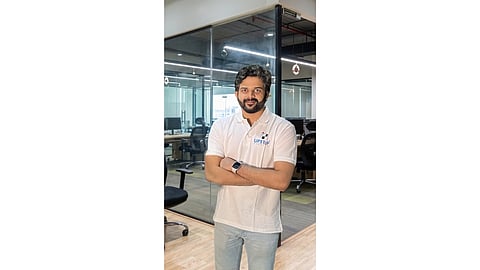
It also reflects the career of Abhijit Hatkar, Founder, MD and CEO of Upstep Academy. Abhijit was a competitive chess player before becoming an entrepreneur. He reached a peak FIDE rating of 2053 and later qualified as a FIDE Instructor and licensed FIDE Arbiter.
After twelve years of coaching, Abhijit had trained students who went on to become state and national champions. But that success also exposed the limitation of the individual-coach model. A student might learn openings from one instructor, tactics from another and tournament preparation through trial and error. For families unfamiliar with competitive chess, there was rarely a clear way to understand what the child had mastered or what should come next. Abhijit came to believe that strong coaches were essential, but strong institutions around the coach were equally important.
For Abhijit, the shift from player and instructor to founder was therefore less a departure from chess than a change in the scale of the problem he wanted to solve. Years spent inside the game had shown him the limits of a learning journey organised around individual interventions. Instead of trying to be present in every important lesson, the challenge became to build an institution in which curriculum, coach development and review mechanisms could carry the same intent across thousands of learning interactions.
“I had spent twelve years coaching students and had seen what structured training could achieve. But as an individual, my impact would always be limited to the number of students I could personally teach. I wanted to create that impact at a much larger scale. That meant building a system where the curriculum and teaching methodology did not depend on one person.”
His background in technology provided another piece of the puzzle. Rather than seeing technology simply as a way to move chess classes online, he saw the potential to use systems, data and automation to make a larger education operation more organised, measurable and consistent. That realisation became the foundation for building Upstep Academy.
Upstep Academy, operational since 2020, was built around that idea. The online chess education company developed a central curriculum, defined learning levels and regular performance reviews. Rather than functioning primarily as a marketplace connecting students with available coaches, the aim was to make the quality of instruction more consistent across teachers, locations and levels of ability.
The academy created a five-level curriculum spanning Beginner to Master stages. Students progress according to their understanding of concepts.
One of Abhijit’s more consequential business decisions was to employ coaches as full-time members of Upstep Academy. In a sector where freelance and marketplace models can make expansion easier, the employee model gives the academy greater control over coach training, lesson delivery and review standards. It also revealed an important lesson: being a strong chess player and being a strong chess teacher are not the same thing.
Today, Upstep says it has trained more than 35,000 students across more than 20 countries and works with over 300 coaches. At that scale, the organisation has to build systems that make good teaching decisions more repeatable.
Technology is increasingly becoming part of that operating model. Automation can reduce repetitive administrative work and improve visibility into attendance, learning activity and progress, while data can help academic teams identify patterns requiring attention. Upstep’s long-term opportunity is to use AI and learning technology to support more personalised recommendations and better decision-making without treating technology as a substitute for the coach.
In Conversation with Abhijit Hatkar
What has been one of the hardest lessons while scaling Upstep?
One important lesson has been that playing strength and teaching ability are two different things. Recruiting a strong chess player is not enough. A coach has to explain complex ideas to children, understand different learning styles, question a student’s reasoning and work within a common academic framework. That makes scaling more demanding. You cannot simply keep adding coaches and assume quality will follow automatically. The systems for selecting, developing and reviewing coaches have to grow with the organisation.
Where do AI, automation and technology fit into that model?
I don’t believe the objective should be to remove the coach. Chess platforms can already record moves, results and a great deal of performance data. But data alone cannot always tell you whether a child made a move because they understood the position, remembered a pattern or simply guessed. That is where human judgement remains important. The opportunity with automation is to make routine workflows more dependable and give academic teams better visibility into what is happening across classes. AI can potentially help organise learning signals and support more personalised recommendations for students and coaches. For us, technology should help a good teacher make better-informed decisions at greater scale, rather than trying to replace the teacher.
How does Upstep approach students who want to pursue chess at a much higher competitive level?
Serious tournament players eventually require a different level of preparation. That is why we created the Grandmaster Accelerator Program at an affordable annual fee, focused on preparation, decision-making and performance under tournament pressure. It addresses something I felt was missing during my own competitive years: a clearer path towards higher-level performance. Five-time World Chess Champion, GM Viswanathan Anand serves as Brand Ambassador and mentor to students and Team Upstep, Also the chief panelist at GAP while an international panel of titled players contributes to the advanced training framework. The important part is ensuring that access to strong players and mentors becomes part of a continuing learning process rather than isolated sessions.
What do you believe chess education often gets wrong?
Chess education often gets too focused on the coach and not enough on the learning system. A great coach matters, but without a clear curriculum, defined progression and regular assessment, learning can become inconsistent. The system around the coach is what makes quality sustainable and scalable.
What ultimately does Upstep have to get right as it grows?
Scale cannot come at the cost of learning quality. Whether the student is a beginner learning the fundamentals or a serious player pursuing higher performance, there should be a clear understanding of where they are, what they need to learn next and how they are progressing. For me, that is the real measure of growth: building an institution where curriculum, coaches, technology and accountability work together so that every student has a clearer path forward.
As Upstep Academy expands its student base, coaching team and technology platform, that principle is likely to become increasingly important. The challenge is no longer simply taking chess education to more families across the world. It is proving that an institution can grow without making learning feel less considered, less personal or less accountable.