
- News
- Women
- Magazine
- IndustryIndustry
- InsightsInsights
- Success Stories
- PublishPublish
- ContactContact
- Media KitMedia Kit
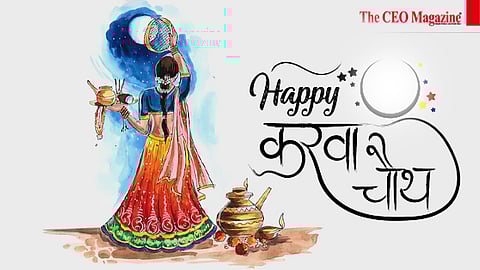
Karva Chauth.
Celebrating The Bond Between Husband And Wife

Karva Chauth, also known as Karwa Chauth or Karak Chaturthi, is a significant Hindu observance traditionally celebrated by married women, particularly across northern and western parts of India.
The occasion is observed on the fourth day of Krishna Paksha in the month of Kartik according to the Purnimanta calendar. In regions following the Amanta calendar, including Maharashtra and parts of southern and western India, the same day falls in the month of Ashwin. Despite the difference in month names, the observance takes place on the same lunar date.
In 2026, Karva Chauth will be observed on Thursday, 29 October.
Traditionally, women observing the vrat begin their fast after the pre-dawn meal and continue until the moon is sighted in the evening. The day includes prayers, preparation of puja items, mehendi, festive clothing, family gatherings and the Karva Chauth vrat katha.
The festival has traditionally centred on marital well-being, but its cultural significance today also includes family togetherness, friendship, celebration and the preservation of regional traditions.
Karva Chauth will be observed on Thursday, 29 October 2026.
Karva Chauth is observed on Krishna Paksha Chaturthi, the fourth day of the waning phase of the Moon.
The date changes every year because it follows the Hindu lunar calendar.
The exact moonrise and puja timings vary by location. For example, the 2026 calendar gives a moonrise of around 8:17 PM in New Delhi and around 9:00 PM in Mumbai, illustrating why local timings should be checked rather than publishing one nationwide moonrise time.
The name Karva Chauth is commonly associated with two words:
Karva or Karak refers to the earthen pot traditionally used during the rituals and for offering water.
Chauth refers to the fourth lunar day on which the observance takes place.
The earthen karva has an important place in the day's rituals and is traditionally decorated and included in the puja.
The festival is also known as Karak Chaturthi in some traditions.
Karva Chauth has traditionally been observed as a vrat for the well-being, prosperity and longevity of the husband.
Women who observe the fast pray to deities including Goddess Parvati, Lord Shiva, Lord Ganesha and Lord Kartikeya, depending on regional and family traditions.
The festival is also associated with devotion, marital commitment and family bonds.
Over time, Karva Chauth has developed into a broader cultural occasion. Alongside the religious rituals, families and friends come together, women exchange gifts and traditional items, and communities participate in festive gatherings.
The festival's meaning can therefore be understood through both its religious traditions and its social and cultural significance.
The Karva Chauth vrat is traditionally observed from after the pre-dawn meal until the sighting of the Moon.
In many traditional practices, the fast is nirjala, meaning that no food or water is consumed during the fasting period. However, fasting practices can vary according to health, family tradition and individual circumstances.
The observance should therefore not be treated as a single identical practice followed by every woman.
The day generally begins before sunrise, when women following the traditional custom have sargi, a pre-dawn meal associated particularly with Punjabi and several North Indian traditions.
After sunrise, the vrat continues through the day until the evening rituals and moonrise.
Sargi is a pre-dawn meal traditionally associated with Karva Chauth, particularly in Punjab and parts of North India.
Traditionally, a mother-in-law prepares or gives the sargi to her daughter-in-law. It may include fruits, sweets, dry fruits, savoury foods, milk-based preparations and other items.
The custom varies between families, but the meal is generally eaten before the day's fast begins.
Today, the sargi tradition has also become an important part of the cultural experience of Karva Chauth, symbolising affection and the bond between family members.
Preparations for Karva Chauth often begin several days before the festival.
Women may purchase traditional clothing, jewellery, mehendi, cosmetics and items required for the puja.
Applying mehendi is an important part of the festive preparations in many communities.
Women often wear sarees, lehengas, suits or other traditional clothing, with red, maroon, pink and other festive colours commonly chosen.
Jewellery and bridal-style adornments are also popular, particularly among newly married women.
The puja thali is prepared with items required for the evening rituals.
Depending on regional tradition, it may include:
Karva or earthen pot
Diya
Roli or kumkum
Rice
Flowers
Incense
Sweets
Water
Sieve or channi
The exact arrangement varies between families.
An important part of the traditional observance is listening to or reciting the Karva Chauth vrat katha.
Different regions and communities follow different versions of the traditional stories associated with the festival.
The stories emphasise devotion, determination, family bonds and the significance of the vrat.
The evening is the most anticipated part of Karva Chauth.
Women traditionally gather for the puja, often sitting together in a circle with their decorated thalis.
The rituals may include prayers to Goddess Parvati and other deities, narration of the vrat katha and the exchange or circulation of karvas and thalis according to local customs.
The sighting of the Moon marks the conclusion of the traditional fast.
Women look at the Moon through a sieve or channi, offer water to the Moon and then traditionally look at their husband's face through the sieve.
The husband then offers water to his wife, after which she breaks her fast.
While this is the best-known form of the ritual, customs differ across communities.
The earthen karva is one of the central symbols of the festival.
Traditionally, the pot is filled with water and decorated for the puja. Water from the karva is offered to the Moon as part of the evening ritual.
The karva also represents the traditional imagery and material culture surrounding the festival, which is why decorated earthen pots remain an important part of Karva Chauth celebrations.
Although Karva Chauth is particularly prominent in northern India, its traditions vary considerably across regions.
Punjab has one of the strongest cultural associations with Karva Chauth.
The day often begins with sargi, followed by mehendi, festive clothing, community gatherings and evening rituals.
Women may gather with relatives and friends to sing traditional songs and listen to the Karva Chauth story.
In Uttar Pradesh, Karva Chauth is observed with regional variations involving prayers, traditional songs, decorated thalis and rituals associated with Goddess Parvati and Lord Shiva.
Women may also gather together for the evening puja and exchange traditional items.
Karva Chauth is observed with distinctive regional customs in Rajasthan.
Traditional attire, decorated puja items, family gatherings and storytelling form part of the celebrations in many communities.
In Haryana, the festival is observed with fasting, sargi, mehendi, traditional clothing and evening prayers.
Family members, particularly mothers-in-law and daughters-in-law, often play an important role in the day's customs.
Karva Chauth has become a highly visible cultural celebration in Delhi, combining traditional rituals with contemporary festive gatherings.
Markets and shopping areas often reflect the festive mood through mehendi stalls, jewellery, ethnic clothing and Karva Chauth-related decorations.
In Maharashtra and regions following the Amanta calendar, Karva Chauth falls in Ashwin rather than Kartik by month naming. The lunar observance itself remains the same day.
Karva Chauth is also associated with Sankashti Chaturthi in these regions, where devotees may observe a Ganesha-related fast according to local tradition.
Although the festival is commonly described as celebrating the relationship between husband and wife, its traditions extend beyond the couple.
The relationship between mother-in-law and daughter-in-law is particularly visible through the sargi tradition.
Friendships among women also form an important part of the festival. Women often gather together to apply mehendi, prepare their thalis, listen to the vrat katha and participate in evening rituals.
For many families, Karva Chauth is therefore a celebration of relationships more broadly—between spouses, parents and children, relatives and friends.
Karva Chauth has evolved while retaining its traditional religious character.
For generations, the festival has provided women with a space to gather, share stories, maintain customs and participate in community rituals.
The preparation of traditional food, application of mehendi, exchange of gifts and wearing of festive clothing have all become part of its contemporary cultural identity.
At the same time, the festival continues to be rooted in the traditional belief that the vrat is undertaken for the well-being and longevity of one's husband.
Modern celebrations may also include husbands participating in the rituals, fasting alongside their wives or presenting gifts, reflecting the changing ways in which couples and families observe the occasion.
Karva Chauth will be observed on 29 October 2026, bringing together generations of religious and cultural traditions.
From the pre-dawn sargi and mehendi preparations to the evening puja and moonrise ritual, each part of the day carries its own significance.
For those who observe the vrat, it remains a deeply personal expression of devotion and prayer. For families and communities, it is also an opportunity to come together and preserve traditions that have been passed from one generation to the next.
The festival's enduring appeal lies in this combination of faith, family and celebration.
Karva Chauth is more than a day marked by fasting. It is an occasion shaped by devotion, family relationships, cultural traditions and togetherness.
While the traditional vrat remains centred on prayers for the well-being and longevity of the husband, the festival has also grown into a broader celebration of companionship and family bonds.
The colourful mehendi, decorated thalis, traditional clothing, evening prayers and anticipation of the Moon together create an atmosphere that is both deeply devotional and festive.
As Karva Chauth 2026 approaches, families across India will once again come together to observe their traditions in their own ways.
May Karva Chauth 2026 bring love, harmony, happiness and togetherness to every family celebrating the occasion.
Wishing everyone a blessed and joyful Karva Chauth 2026.
Follow us on Google News
