- News
- Women
- Magazine
- IndustryIndustry
- InsightsInsights
- Success Stories
- PublishPublish
- ContactContact
- Media KitMedia Kit

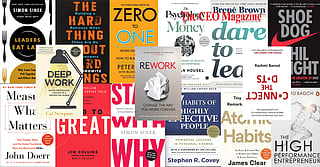
Top 15 Leadership Books Every Indian Founder Must Read Before Scaling Up

In a world of reels, shorts and quick hacks, it’s easy to forget one simple truth:
deep thinking still wins long-term games.
Most successful founders and CEOs you admire—Indian or global—are heavy readers. Books give you what social media never can:
Decades of experience compressed into a few hours of reading
Mental models for decision-making under uncertainty
Stories & case studies that help you avoid costly mistakes
Language to communicate vision, culture and strategy to your team
If you are building a startup, scaling an SME, or leading a large organisation, this leadership reading stack will sharpen how you think about:
People & culture
Strategy & execution
Decision-making & discipline
Your own mindset as a leader
Use this list as a practical toolkit, not a “bucket list” you never touch.
Don’t try to read all 15 books at once.
Pick 2–3 books based on your current stage:
Early-stage founder: focus on mindset, habits & basics.
Scaling-stage founder: focus on strategy, culture & systems.
Established leader: focus on deep work, influence & legacy.
Aim for 20–30 minutes of reading per day (morning or night).
Take notes, underline and convert ideas into action items for your business.
Why this book for founders:
This is not just a “self-help classic”. It’s a leadership operating system. Covey’s 7 habits help you move from being reactive and overloaded to proactive, principle-centered and focused on what truly matters.
Key Leadership Takeaways
Take extreme ownership of your choices (“Be Proactive”).
Start every project, quarter and relationship with the end in mind.
Learn to prioritise important (strategy, culture, relationships) over urgent (emails, fires).
Build win–win relationships with co-founders, investors, customers and team.
Ideal for:
Founders at any stage, especially those feeling overwhelmed or “stuck in operations”.
Action Tip:
Pick one habit per week and consciously apply it in your leadership decisions.
Why this book for leaders:
Scaling a company is basically scaling habits at an organisational level. This book shows how small, consistent improvements compound into massive results.
Key Leadership Takeaways
Focus on systems, not goals – perfect for founders designing repeatable processes.
Tiny 1% improvements daily → exponential growth over time.
Identity-based habits: become “the kind of leader who…”, not just someone chasing targets.
Ideal for:
Founders who struggle with consistency, discipline or follow-through across their team.
Action Tip:
Use the 4-step habit model (Cue–Craving–Response–Reward) to design habits for your sales team, content team, operations, finance.
Why this book for founders:
This is one of the most honest startup leadership books ever written. No fluff, no motivational quotes—just raw reality of layoffs, co-founder conflicts, investor pressure and near-death situations.
Key Leadership Takeaways
There is no “easy” formula to becoming a great CEO.
How to make brutally tough decisions without losing your soul.
How to communicate during crises and keep the team aligned.
Ideal for:
Founders in mid to late stage, facing pressure—cash burn, competition, or internal chaos.
Action Tip:
Use this book when you’re facing a hard, emotional decision—it will give you frameworks and comfort both.
Why this book for leaders:
This book is about thinking in contrarian, high-leverage ways instead of building “just another” company. It pushes you to ask: Are we truly unique or just a copy?
Key Leadership Takeaways
Importance of monopoly-like uniqueness vs competing as a commodity.
Why vision and belief matter more than incremental optimisation at early stages.
How strong founding teams think about the future and competition.
Ideal for:
Startup founders, especially in tech, SaaS, D2C and product-based businesses.
Action Tip:
Have your leadership team answer: “What do we believe that most people in our industry disagree with?”
Why this book for leaders:
Brilliant book on culture, trust and psychological safety. It explains why some organisations feel like families and others like war zones.
Key Leadership Takeaways
Leadership is not about rank, it is about responsibility.
Why people perform at their best when they feel safe, appreciated and trusted.
The chemistry of trust (oxytocin, cortisol) and how leaders influence it.
Ideal for:
CEOs & founders who want to build long-term culture, not just hit quarterly targets.
Action Tip:
Review your policies, meetings and internal communication through one lens:
“Does this make my people feel safer and more supported?”
Why this book for founders:
If your team is confused, misaligned or low on motivation, there’s a good chance your “Why” is not clear or not communicated enough.
Key Leadership Takeaways
People don’t buy what you do, they buy why you do it.
How to articulate a clear vision that pulls people towards it.
The Golden Circle: Why → How → What (perfect for your brand story).
Ideal for:
Early to mid-stage founders refining their brand positioning, hiring and culture story.
Action Tip:
Write one page titled: “Why Our Company Exists” and share it with every new hire.
Why this book for leaders:
This is a research-driven study on companies that moved from “good” to “great” and stayed that way for long periods.
Key Leadership Takeaways
Level 5 Leadership: humble + fiercely determined.
“First who, then what” – focus on getting the right people on the bus.
The Hedgehog Concept: focus where you can be the best, are deeply passionate, and can make money.
Ideal for:
Founders & CEOs running established or growing companies who want to build a legacy business.
Action Tip:
Use the Hedgehog Concept exercise in your next strategy offsite with your senior team.
Why this book for founders:
If your team is busy yet outcomes are unclear, you likely need a better goal-setting system. This book explains OKRs (Objectives & Key Results) with powerful stories (Google, Intel, etc.).
Key Leadership Takeaways
How to set clear, measurable objectives and key results.
Align individual, team and company goals.
Build a culture of transparency and accountability.
Ideal for:
Founders at scale-up stage, or any business with 10+ people where alignment is becoming a challenge.
Action Tip:
Pilot OKRs with just one team for 1 quarter before rolling out company-wide.
Why this book for leaders:
In leadership roles, distraction is a silent killer. This book shows how to design your life and calendar around deep, focused work instead of shallow busyness.
Key Leadership Takeaways
Why deep, uninterrupted work is your biggest competitive advantage.
How to build routines where thinking time is protected.
How to reduce digital noise and constant context-switching.
Ideal for:
Founders & CXOs juggling too many meetings, pings and tasks.
Action Tip:
Block 2–3 deep work slots per week as “strategy only” time.
Why this book for leaders:
Money decisions are emotional, not purely logical. As a founder, your relationship with risk, wealth, spending and investing influences every major decision.
Key Leadership Takeaways
Wealth is what you don’t see (savings, buffers), not just flashy success.
Behaviour > intelligence when it comes to money.
Why long-term thinking beats short-term speculation.
Ideal for:
Founders at any stage, especially those managing personal + business finances together.
Action Tip:
After reading, define your own “enough” and wealth philosophy. It will stabilise your leadership decisions.
Why this book for founders:
Short, sharp and contrarian. Perfect for busy entrepreneurs who want practical, non-theoretical advice.
Key Leadership Takeaways
You don’t need big teams, huge funding or complex plans to win.
Focus on doing less, better.
Challenge traditional corporate rules: meetings, bureaucracy, overplanning.
Ideal for:
Bootstrap founders, small business owners, SME leaders in India.
Action Tip:
Read 1–2 chapters a day and discuss with your co-founder or leadership group.
Why this book for leaders:
This book goes deep into vulnerability, courage and authenticity in leadership—critical for building modern, human workplaces.
Key Leadership Takeaways
Brave leaders build trust by being open and real.
Difficult conversations are a core leadership skill, not a side task.
Shame and fear quietly destroy team performance if not handled well.
Ideal for:
Leaders managing diverse teams, especially relevant for women leadership, HR heads & people-centric founders.
Action Tip:
Use the book to design better feedback conversations and 1:1s with your core team.
Why this book for founders:
This is the autobiography of Nike’s founder. It’s less about “how to do marketing” and much more about resilience, risk and long-term belief.
Key Leadership Takeaways
Every big brand you see today almost died several times.
Founder journeys are messy, non-linear and uncertain.
Passion, persistence and smart risk-taking make the difference.
Ideal for:
Every entrepreneur who needs emotional fuel and wants to feel less alone in the struggle.
Action Tip:
Read this when you’re going through a tough phase; it humanises the journey.
Why this book for Indian leaders:
Written by the co-founder of Mindtree, this is one of the best India-context books on entrepreneurship and leadership.
Key Leadership Takeaways
How to evaluate whether you’re ready to be an entrepreneur.
Building from India, for the world – with Indian constraints.
Practical lessons on hiring, culture and scaling.
Ideal for:
Indian founders, especially those coming from middle-class backgrounds or service careers.
Action Tip:
Use this as a manual when planning your next 3–5 year growth journey.
Why this book for leaders:
A collection of Indian entrepreneurial stories of people who started without an IIM/elite background, yet built impactful businesses.
Key Leadership Takeaways
Inspiration from real, Indian, non-glamour stories.
Mindset: resourcefulness, jugaad, perseverance.
Many relatable contexts: small towns, family pressure, limited capital.
Ideal for:
First-generation entrepreneurs, small-town founders, Hindi-heartland entrepreneurs—very aligned to your audience.
Action Tip:
Gift this book to young founders or team members thinking about entrepreneurship.
Reading randomly is good. Reading strategically is better.
Here’s a simple system you can follow:
Keep three books at any time:
1 leadership / mindset
1 biography / story
1 domain book (marketing, finance, tech etc.)
20 pages a day rule
Even at 20 pages/day, you can finish 15–20 books a year.
Create a “Founder Notes” document
After finishing each book, summarise:
Top 5 ideas
3 decisions you will change in your company
1 habit you will start or stop
Discuss with your leadership team
Turn books into team culture by discussing them in monthly meetings.
1. Which leadership book should I read first as a new founder?
If you’re just starting, begin with Atomic Habits (for personal discipline) and The 7 Habits of Highly Effective People (for overall life & leadership framework).
2. I don’t like reading long books. Any workaround?
Start with shorter, punchy books like Rework or read 10 pages a day. You can also use Kindle or audiobooks from Amazon to listen while commuting.
3. Are these books relevant for Indian context?
Yes. While many are global, the principles are universal. Books like The High Performance Entrepreneur and Connect the Dots are written specifically from an Indian perspective.
4. How many leadership books should a CEO read in a year?
There’s no fixed number, but even 6–12 good books a year can completely change how you think, decide and lead.
Markets will change. Technology will change. Funding climates will change.
The one asset that compounds over time is your thinking.
If you pick even 3–5 books from this list and genuinely apply what you learn, your leadership, your team and your business will not be the same.
Follow us on Google News