
- News
- Women
- Magazine
- IndustryIndustry
- InsightsInsights
- Success Stories
- PublishPublish
- ContactContact
- Media KitMedia Kit

Family Health Insurance vs Individual Plans

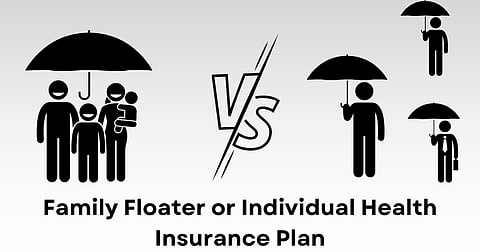
Choosing the right health insurance policy often feels like standing at a crossroads. One path promises simplicity and shared benefits, while the other offers independence and personalised protection. When it comes to family health insurance versus individual health plans, the decision is not about which option is better in general but which one suits your life stage, health risks, and financial priorities.
In India, healthcare expenses are rising steadily, and medical emergencies rarely come with advance notice. That is why selecting the right coverage is not just a financial decision but a long-term commitment to your family’s well-being. Let us break down both options clearly so you can choose with confidence.
Family health insurance is a single health insurance policy that covers multiple family members under one shared sum insured. Instead of purchasing separate policies for each individual, one policy provides collective coverage, making it easier to manage and renew.
Typically, a family health insurance plan can include self, spouse, and dependent children, and in some cases parents, depending on the insurer’s terms and conditions. The sum insured is shared among all covered members, meaning any claim made by one person reduces the available coverage for the rest during the policy period. The premium structure is generally lower than buying multiple individual policies, as the risk is pooled across family members, making it a cost-effective option for younger and healthier families.
An individual health insurance plan is designed to cover one person with a dedicated sum insured. Each insured member has a separate policy, premium, and benefits. When individual plans are purchased for multiple family members, every policy functions independently, ensuring that coverage for one person is not linked to or affected by another.
The biggest advantage of individual plans is independent coverage. Hospitalisation or claims by one member do not reduce protection for others. These plans also offer cumulative bonuses for claim-free years, increasing the sum insured over time. They provide flexibility to add parents or extended family separately. However, buying multiple individual plans usually results in a higher overall premium compared to a family floater.
Here’s a quick comparison to help you understand how family health insurance differs from individual plans:
At first glance, a family floater often appears more cost-effective because of its lower premium. However, the real value of a health insurance policy should be measured by how well it supports you during multiple or high-value medical claims. Cost alone does not define the quality or reliability of coverage.
Individual plans with the same sum insured for each member may have a slightly higher total premium.
Each family member gets independent and uninterrupted coverage, unaffected by others’ claims.
This is especially important for families with ageing parents, lifestyle-related health risks, or a medical history.
Family floaters work best when the chances of hospitalisation are low.
In comparison, a family floater is ideal for younger families where the likelihood of multiple claims in a single year is minimal. It offers a practical balance between affordability and coverage when health risks are relatively low.
There is no one-size-fits-all answer. Your decision should depend on a few key factors.
Age and health condition are key factors. Younger and healthier families may benefit from a family floater, while older members or those with existing medical conditions may be better covered with individual plans.
Risk exposure should be evaluated. High-risk professions or lifestyles often require an individual sum insured for stronger protection.
Financial capacity matters. Family floaters lower the initial premium, whereas individual plans provide long-term stability and wider coverage benefits.
Future requirements must be considered. Growing children, separate coverage for parents, or planned medical treatments can influence the most suitable option.
Choosing between family health insurance and individual plans is about aligning coverage with your real-life needs. A family floater works well for affordability and easy management, while individual plans offer higher flexibility, personalised coverage, and uninterrupted protection. The right health insurance policy depends on your family size, medical history, lifestyle, and long-term financial goals.
Evaluating these factors carefully helps you avoid coverage gaps and unexpected expenses. When emergencies strike, a well-chosen plan lets you focus on recovery instead of costs. Providers like Bajaj General Insurance offer reliable options that help individuals and families make confident decisions for a secure and worry-free future.
Disclaimer: Claims are subject to the terms and conditions set forth under the health insurance policy.
Follow us on Google News