
- News
- Women
- Magazine
- IndustryIndustry
- InsightsInsights
- Success Stories
- PublishPublish
- ContactContact
- Media KitMedia Kit

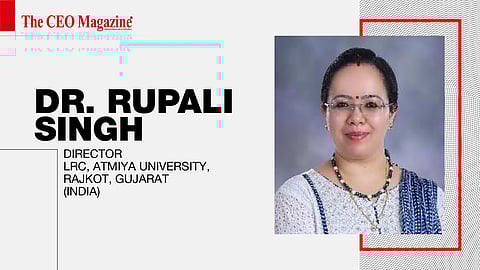
Dr. Rupali Singh - Director - LRC, Atmiya University, Rajkot, Gujarat (India)

In my recent Strategic Minds newsletter on LinkedIn, I explored how Diversity, Equity, and Inclusion (DEI) in Gujarat is evolving from a “people agenda” into a strategic growth driver for talent, competitiveness, and long-term resilience.
In this article, we go deeper—from diagnostics to design, from data to lived impact, and from intent to organizational outcomes.
Many leaders still view DEI as a compliance requirement or an HR initiative. The reality is different: DEI is a value-creation strategy. Research globally—and patterns emerging in Gujarat—show that organizations with diverse leadership teams outperform peers in innovation, decision quality, customer insight, and stakeholder trust. DEI directly influences:
Strategic decision-making agility
Market relevance in diverse customer segments
Talent pipeline strength and retention
ESG performance and investor confidence
For CEOs, this reframing is critical: inclusion is now a financial and strategic metric, not a checkbox.
Earlier analysis highlighted progress in female workforce participation, women in manufacturing, women-owned MSMEs, and education trends. But numbers alone do not make strategy—the application of insight does.
Consider these patterns:
A. Industry Anchors Inclusion Through Policy & Practice
Leading Gujarat-based firms have linked DEI goals to leadership KPIs
Return-to-work programs and flexible work models are improving retention for mid-career women
Investment in women-specific skill-development is creating pipeline-ready talent
B. Education to Employment: Closing the Loop
While Gujarat’s female literacy and higher education enrolment are strong, the real value lies in bridging education with employability. Leaders are investing in:
Apprenticeship partnerships with universities
Industry-academia councils focused on women in STEM
Soft-skill incubation for women entrepreneurs
This alignment is already showing impact in pharmaceuticals, logistics, and tech services.
From my advisory experience, the difference between lasting DEI initiatives and symbolic ones lies in leadership behaviour. High-impact organizations exhibit:
A. DEI Owned at the Top
CEOs and boards must consistently communicate why DEI matters — not just that it matters. Visibility at the executive level sets tone and accountability.
B. Metrics Owned Across Functions
DEI metrics must be embedded in business dashboards:
Leadership diversity goals
Internal mobility statistics
Attrition & retention analytics
Supplier diversity spend
C. Reinforcement Through Culture
Policies enable inclusion — culture sustains it. This requires:
Inclusive language and behavior norms
Cross-functional mentorship ecosystems
Safe channels for feedback and escalation
Gujarat’s MSME networks, progressive state policies, and vibrant start-up culture provide fertile ground for DEI-led growth. But corporate leaders must also engage with:
Skill development boards
Local chambers of commerce
Government incentive schemes
Education and vocational partners
Successful DEI strategies are co-created with the broader ecosystem, not walled within organizational boundaries.
DEI is now central to competitiveness. Leaders should now think about:
Predictive DEI analytics to forecast talent gaps
DEI-linked innovation challenges to leverage cognitive diversity
Inclusive product and service design for a diverse market
Supplier diversity programs for equitable economic participation
CEOs must transition DEI from a moral imperative to a commercially driven, strategy-led business priority.
Follow us on Google News