
- News
- Women
- Magazine
- IndustryIndustry
- InsightsInsights
- Success Stories
- PublishPublish
- ContactContact
- Media KitMedia Kit




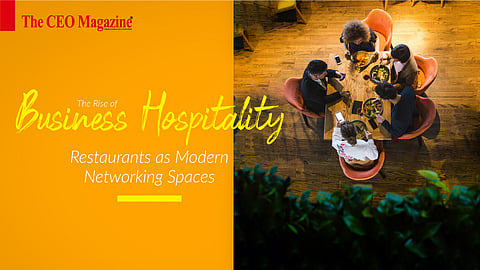
The Rise of Business Hospitality: Restaurants as Modern Networking Spaces

For decades, the boardroom was considered the centre of professional conversations. Deals were negotiated across conference tables, strategies were discussed under fluorescent lights, and partnerships were formalised through scheduled meetings. Yet today, an increasing number of those conversations are happening somewhere else: across restaurant tables.
In cities around the world, restaurants have quietly become extensions of the business world. From early breakfast meetings to late evening dinners, they serve as informal yet powerful environments where ideas flow, relationships deepen, and opportunities take shape. For dynamic business leaders, dining spaces are no longer simply about food. They are becoming strategic venues for connection, trust-building, and influence.
This shift reflects a broader change in how professionals approach networking and relationship building in the modern economy.
Business relationships are rarely built in one meeting. They grow through conversations, shared experiences, and moments of genuine interaction. Restaurants naturally create an atmosphere that encourages this kind of engagement.
Unlike formal office settings, dining environments soften hierarchy. The structured tone of boardroom discussions often gives way to more relaxed dialogue. People tend to listen more attentively, share more openly, and explore ideas more creatively when they are seated over a meal rather than facing a presentation screen.
For leaders, this atmosphere can be incredibly valuable. Important discussions that may feel rigid in an office often become fluid over lunch or dinner. The shared experience of a meal fosters familiarity, which in turn strengthens professional trust.
In many cases, the most significant decisions are not made in scheduled meetings but in these quieter, conversational spaces.
Across cultures, sharing food has long been associated with trust and relationship building. Business hospitality builds on this deeply human tradition.
When leaders invite clients, partners, or colleagues to dine together, the gesture communicates more than professionalism. It signals respect, attention, and a willingness to invest time in the relationship.
A well-chosen restaurant can also reflect thoughtfulness. Understanding a guest’s dietary preferences, cultural background, or culinary interests demonstrates awareness beyond business objectives. These small considerations often leave lasting impressions.
For global executives who regularly work across cultures, dining becomes an especially important bridge. Meals allow professionals to connect in ways that go beyond formal negotiations, creating an environment where mutual understanding grows naturally.
One reason restaurants have become powerful networking spaces is their neutrality. Unlike office spaces, which belong to one party, restaurants create a shared environment where everyone enters as a guest.
This neutrality subtly changes the dynamics of conversation. Discussions feel less transactional and more collaborative. Participants are not confined by corporate settings or internal power structures.
For entrepreneurs, this environment can be particularly useful. Meeting investors, advisors, or potential partners over a meal often leads to more candid conversations than those conducted within rigid office frameworks.
The informal nature of the setting allows personalities and ideas to surface more authentically.
In many major business cities, from London and New York to Singapore and Dubai, restaurants have evolved to cater specifically to professional gatherings. Private dining rooms, quiet corners, flexible seating arrangements, and attentive service create spaces ideal for business discussions.
These venues understand the rhythm of executive schedules. Breakfast meetings begin early. Lunch tables turn quickly. Evening dining extends into longer conversations.
For business leaders, this environment offers something offices rarely provide: a blend of privacy and atmosphere. It allows discussions to remain focused while still benefiting from the relaxed energy of a social setting.
As a result, business hospitality has become an important part of corporate culture.
Food itself plays an interesting role in professional interaction. While the primary purpose of a business meal may be conversation, the act of dining together creates subtle moments of connection.
Discussing menu choices, sharing dishes, or exploring new cuisines often sparks dialogue that goes beyond immediate business topics. These small exchanges humanise professional relationships.
Leaders who recognise this dynamic often use dining as a tool to deepen rapport. Instead of rushing through meetings, they allow space for conversation to unfold naturally.
In many cases, the trust built through these moments ultimately strengthens long-term partnerships.
While conferences and networking events remain important, restaurants provide an alternative environment for meaningful professional engagement. Instead of brief introductions in crowded rooms, leaders can host smaller, more focused gatherings.
Private dinners with industry peers, informal lunches with potential collaborators, or curated roundtable meals with clients often lead to richer discussions. The intimacy of a shared table allows ideas to evolve in ways that structured events rarely permit.
Many executives now intentionally plan such gatherings as part of their networking strategy. Rather than relying solely on large-scale events, they cultivate relationships through smaller, more personal interactions.
This approach aligns with a broader shift in leadership culture, where quality of relationships matters more than quantity of contacts.
The rise of entrepreneurship has further amplified the role of restaurants in business networking. Startup founders, investors, and advisors frequently use dining spaces as informal meeting points.
Cafés and restaurants near business districts often become hubs where entrepreneurs brainstorm ideas, discuss funding opportunities, or connect with mentors.
These environments blur the boundaries between social and professional interaction. A casual coffee meeting can turn into a partnership discussion. A dinner with friends can evolve into a new venture idea.
In innovation-driven industries, such spontaneous conversations often spark some of the most exciting collaborations.
For business leaders, the choice of restaurant can influence the tone of a meeting. A quiet, well-designed space encourages focused conversation. A lively environment may be better suited for celebratory gatherings or creative discussions.
Location, ambiance, service quality, and menu flexibility all contribute to the experience.
Thoughtful leaders consider these elements carefully. A restaurant that feels welcoming yet professional allows guests to feel comfortable while still maintaining a sense of purpose.
Ultimately, the goal is to create an environment where conversation flows naturally and attention remains on the relationship rather than the surroundings.
As professional cultures continue to evolve, restaurants are likely to play an even larger role in business networking. Hybrid work models have reduced the number of daily office interactions, making intentional meetings more valuable.
Dining spaces offer a setting where professionals can reconnect face-to-face in meaningful ways.
At the same time, hospitality itself is evolving. Many restaurants are designing spaces specifically with professional gatherings in mind, blending culinary excellence with functionality for meetings and discussions.
This intersection of business and hospitality is creating a new category of professional engagement.
In the end, restaurants as networking spaces reflect a simple truth: business is fundamentally about relationships.
While contracts and strategies matter, trust is built through human connection. Sharing a meal creates a moment where professionals step away from the pressures of formal environments and engage with each other more authentically.
For dynamic business leaders, understanding the power of these moments is essential. The restaurant table is no longer just a place to dine. It has become a modern stage for conversation, collaboration, and opportunity.
And often, the partnerships that shape the future of business begin not in a boardroom, but over a thoughtfully shared meal.
Follow us on Google News