
- News
- Women
- Magazine
- IndustryIndustry
- InsightsInsights
- Success Stories
- PublishPublish
- ContactContact
- Media KitMedia Kit
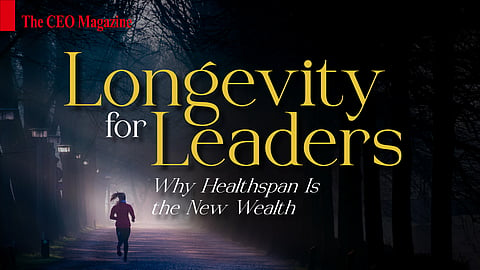
Longevity for Leaders: Why Healthspan Is the New Wealth

For decades, success in business was measured by growth, influence, and financial achievement. Leaders built companies, expanded markets, and accumulated wealth as symbols of accomplishment. Yet today, a quieter but powerful shift is taking place in executive circles. Increasingly, leaders are recognising that the most valuable asset they possess is not capital or reputation; it is their health. More specifically, it is their healthspan.
Healthspan refers to the number of years a person lives in good physical, mental, and emotional health, free from serious disease or debilitating limitations. While lifespan measures how long someone lives, healthspan focuses on the quality of those years. For business leaders responsible for complex decisions and long-term strategies, this distinction is becoming profoundly important.
The new leadership conversation is not simply about living longer. It is about staying capable, focused, and resilient for decades.
Leadership today requires sustained cognitive and emotional performance. CEOs and entrepreneurs are expected to make high-stakes decisions, guide teams through uncertainty, respond to global changes, and maintain clarity under pressure.
Unlike many professions, leadership does not necessarily slow down with age. In fact, some of the most impactful business leaders continue contributing well into their later years. Experience, judgement, and perspective deepen over time, making seasoned leaders invaluable to organisations and industries.
However, maintaining this level of performance requires physical and mental vitality. Chronic fatigue, stress-related illness, and declining cognitive sharpness can quietly undermine leadership effectiveness.
This reality has led many executives to rethink their approach to health.
Historically, health often became a priority only after a problem emerged. Busy professionals postponed check-ups, ignored early warning signs, and placed work demands above personal wellbeing.
Today, that mindset is changing.
Leaders are increasingly adopting preventive health strategies designed to protect long-term vitality. Instead of reacting to illness, they are investing in habits and medical insights that help detect risks early and maintain optimal performance.
Preventive screenings, regular health assessments, and lifestyle adjustments are becoming common among executives who view health not as an afterthought, but as part of strategic life planning.
This shift reflects a broader understanding that leadership longevity requires physical sustainability.
One of the most significant developments in longevity science is the recognition that muscle mass and strength are closely linked to long-term health outcomes. Strength supports metabolic stability, protects bone density, and reduces the risk of injuries later in life.
As a result, many leaders are incorporating resistance training into their routines. Unlike traditional fitness trends focused on appearance, this approach emphasises functional strength and mobility.
Regular physical activity improves energy levels, enhances mood, and supports cardiovascular health. For executives managing demanding schedules, it also provides an essential outlet for stress.
Strength, in this context, becomes more than a fitness goal. It becomes a foundation for sustained leadership performance.
The responsibilities of leadership rely heavily on mental clarity. Strategic thinking, problem-solving, and judgement require a well-functioning brain.
Sleep, nutrition, and stress management play critical roles in maintaining cognitive health. Leaders who prioritise quality sleep often report improved focus, creativity, and emotional regulation. Balanced nutrition supports brain function and stabilises energy levels throughout demanding days.
Mental fitness practices such as mindfulness, reflection, and continuous learning also contribute to long-term cognitive resilience. Engaging the mind through reading, discussion, and intellectual curiosity helps preserve neural pathways and adaptability.
For leaders navigating complex environments, mental sharpness is as valuable as any business skill.
Leadership carries invisible pressures. Decision fatigue, financial accountability, team management, and constant connectivity create a continuous flow of responsibility.
Without proper management, chronic stress can gradually erode health. Elevated cortisol levels affect sleep, metabolism, and immune function, increasing the risk of long-term health issues.
Many executives are now integrating stress management techniques into their routines. Practices such as meditation, breathing exercises, time in nature, and structured downtime help regulate the nervous system and restore mental balance.
These moments of recovery allow leaders to maintain emotional stability even during demanding periods.
Nutrition has also become a key component of leadership longevity. Instead of focusing solely on calorie control, many executives are paying closer attention to how food influences energy, focus, and long-term health.
Balanced diets rich in whole foods, protein, healthy fats, and micronutrients support metabolic stability and reduce inflammation. Proper hydration and mindful eating habits further enhance physical wellbeing.
Leaders who understand the connection between nutrition and performance often treat meals as an investment in their productivity rather than a secondary concern.
Recovery is an often overlooked aspect of longevity. High-performing individuals frequently push themselves to maintain relentless schedules, believing constant activity equates to productivity.
In reality, recovery periods are essential for sustaining performance. Adequate sleep, relaxation, and mental downtime allow the body and mind to repair and regenerate.
Leaders who build recovery into their routines often experience greater endurance and sharper decision-making. Instead of burnout cycles, they create sustainable rhythms that support long-term effectiveness.
For many executives, personal health is no longer viewed as purely individual. Leaders increasingly recognise that their well-being influences the culture of their organisations.
When leaders demonstrate balanced lifestyles, prioritise health, and openly discuss wellbeing, they encourage employees to adopt similar habits. Organisations benefit from healthier, more focused teams and reduced burnout.
In this way, leadership longevity contributes to broader workplace wellbeing.
The phrase “health is wealth” has existed for generations, but its meaning is gaining renewed relevance in the business world. Financial success alone does not guarantee a fulfilling life if health limits the ability to enjoy it.
Leaders who prioritise healthspan are making a different calculation. They understand that wealth, influence, and impact become far more meaningful when accompanied by vitality and independence.
The ability to think clearly, move freely, and engage fully with work and life becomes a form of wealth that cannot be easily replaced.
Advances in medical science, nutrition research, and wellness technology will continue to shape how leaders approach health. Personalised health monitoring, preventive medicine, and lifestyle optimisation tools are becoming increasingly accessible.
Yet the core principles remain simple: consistent movement, balanced nutrition, restorative sleep, stress management, and regular health assessments.
These habits may seem straightforward, but their cumulative impact over decades can determine whether leaders remain energetic contributors or face premature limitations.
In the evolving definition of success, longevity is becoming a meaningful metric. Leaders are no longer asking only how quickly they can grow their organisations but how sustainably they can maintain the capacity to lead.
Healthspan is emerging as the foundation upon which all other achievements rest.
Because in the long arc of leadership, the greatest asset a person can possess is not just influence or financial capital; it is the ability to remain present, capable, and engaged for the years ahead.
And increasingly, that is why healthspan is being recognised as the new wealth.
Follow us on Google News